Recovery of Critical Raw Materials from Permanent Magnets
The demand for rare earth elements like neodymium has significantly increased. Neodymium, for example, is utilized in data centers and in permanent magnets for electric vehicles and wind turbines.
China dominates the primary production of rare earth metals, which has increased geopolitical risks related to these raw materials. This situation combined with rapidly growing demand and low recycling rates, has encouraged researchers to develop new recovery solutions from secondary sources, for example, from discarded permanent magnets and magnetic waste. Currently, only one percent of the rare earth elements used in the European Union is recycled. The low recycling rate can be partly explained by the fact that current recycling methods are not economically viable. The need for new methods is therefore clear, according to Assistant Professor Jani Moilanen from the University of Jyväskylä, who led the research together with Professor of Chemical Circular Economy Ari Väisänen from the same university.
The recently developed process was designed to be as simple as possible and to be based on benign chemicals. The researchers used the same organic methanesulfonic acid in dissolving and recovering steps, which minimized the use of different acids in the recovery process. In addition, the process required only two other low-risk aqueous solutions to recover other raw materials, such as cobalt, from the permanent magnet, the information said.
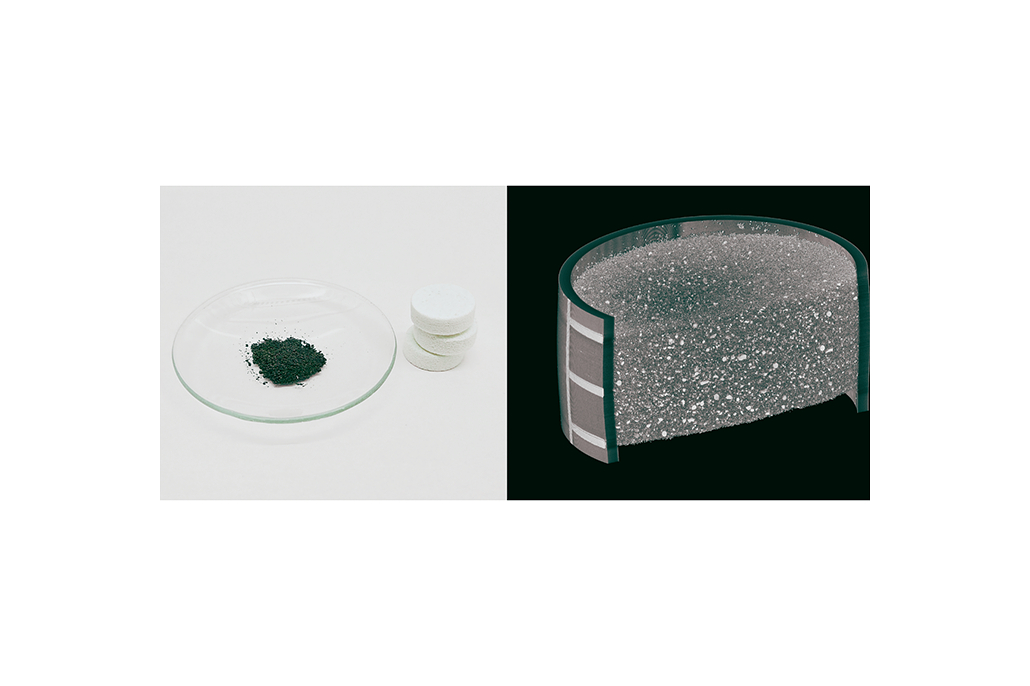
As underlined by the university, the developed process proved to be extremely effective. Over 96 percent of the rare earth elements in the permanent magnets were recovered, and the purity of this fraction was over 99 percent. In addition to the process development, the 3D-printed filters used in solid-phase extraction were also studied using various methods.
The Technology Industry 100th Anniversary Foundation, the Jane and Aatos Erkko Foundation, and the Academy of Finland funded the research.
(Published in GLOBAL RECYCLING Magazine 2/2026, Page 30, Photo: University of Jyväskylä)