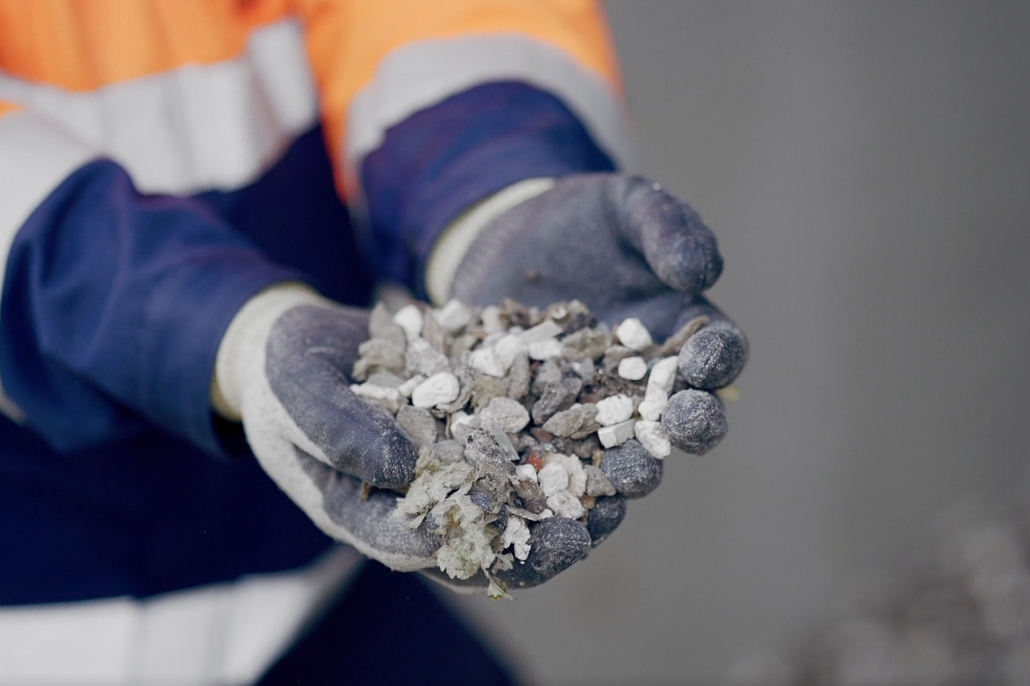
Construction and Demolition Waste: From Downcycling towards Closed- and Open-Loop Recycling
The construction industry generates paramount quantities of waste. While recycling rates of construction and demolition waste (CDW) vary around the world, in all regions most of the material recovered is downcycled into low-quality materials or sent to landfill. As the demand for raw materials is growing and the depletion of natural resources is on the rise, advanced waste recovery facilities and recycling plants are becoming the focus of attention. STADLER, a leading supplier of sorting plants for the recycling industry, is seeing a rise in the demand of waste sorting plants capable of producing high-quality materials that can be recycled to partially replace raw natural resources in the production cycle of construction materials.
The construction industry is by far the biggest generator of waste in the European Union – about 870 million tons in 2017 – which accounts for 30% to 40% of the total waste generation in industrialized countries. In spite of the high volumes of generated CDW, its recycling rates vary enormously in different countries around the world: while countries including the Netherlands, Ireland and Hungary reported recovery rates of 99% to 100% in 2017-2018, the figures for other nations ranged from 0% to 69%. In all cases most of the recovered materials are downcycled – mainly used for backfilling in road construction, building foundations or embankments – or sent to landfill. This means that the recovered materials do not replace or significantly reduce the use of raw materials in the production process, hindering an effective circular economy.

Juan Carlos Hernandez Parrodi (Photo: STADLER)
CDW: a high recycling potential
“This represents a huge untapped potential,” says Dr. Juan Carlos Hernández Parrodi, Senior Project Manager, Research & Development at STADLER. “Typically, CDW is made up of concrete, wood, metals, glass, masonry rubble, stones, soil, sand, gypsum, plasterboard, asphalt, plastics, insulation, paper, cardboard and salvaged building components. There is very little that can’t be recycled – the recycling potential of this waste can be higher than 90%.”
Recovered materials from CDW can be recycled in a variety of applications. For example, today less than 5% of recovered aggregates are used in the production of new concrete. However, recovered aggregates are said to be suitable for the substitution of 10% to 20% of virgin aggregates for many concrete applications, which range from pipe bedding to concrete and block construction. “In fact, some previous studies have pointed out that, if appropriately processed to remove moisture and impurities, recovered aggregates can even have advantages over raw materials in some cases, such as higher compressive strength and a wider range of applications in the construction industry,” explains Hernández Parrodi.”
The demand for advanced recovery plants is set to increase fast
The effective management of CDW is becoming an increasingly urgent issue. As natural resources are depleted and the demand from the construction industry continues to grow, recycling CDW to replace raw materials is fast turning into a necessity: “Even if we were to recycle 100% of the generated CDW, we would not be able to meet the current demand of construction materials” says Hernández Parrodi.
Awareness among governments, environmental organizations, educational institutions and the general public is growing. The gradual implementation of ordinances and directives in the EU and around the world is diverting increasingly significant amounts of CDW from landfill towards recycling and material recovery plants.
“This evolution is accelerating,” says Hernández Parrodi. “Legislation regulating the amounts of CDW that can be disposed of in landfill is increasingly restrictive and aims to promote the recovery of secondary materials and recycling. At the same time, new regulations are setting high standards for recycled construction materials, encouraging a shift from downcycling to recycling and upcycling. All these factors are driving a fast growth in the demand for technology innovation and facilities capable of recovering high-quality materials from CDW.”
The development of the CDW recycling industry: towards a circular economy
The effective sorting of CDW is key to achieving the high quality levels required for successful recycling and upcycling in a broad range of construction applications. The composition of this type of waste and the requirements for the targeted output fractions varies significantly from country to country, and sometimes even at regional level. “Similarly to other waste streams, such as municipal solid waste or packaging waste, there is no standard recipe for processing CDW,” explains Hernández Parrodi.
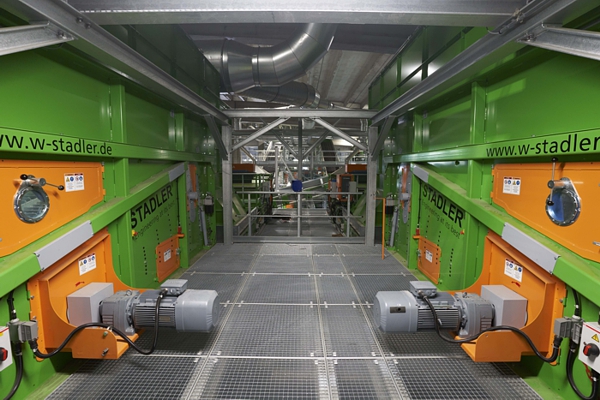
Ballistic Separators (Photo: STADLER)
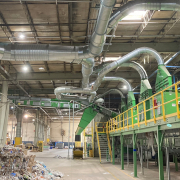
STADLER is able to bring its extensive experience in the design of advanced sorting plants to the construction sector, developing tailored solutions to match the individual situations: “The consideration of all the specific factors, together with our know-how, enables us to provide effective, efficient and high-quality sorting facilities. Since we produce and assemble most of our equipment ourselves, we can be very agile in project planning, development and execution. Also, we employ the latest sorting equipment available in the market, such as sensor-based and robotic sorting systems.”
CDW sorting processes need to be flexible, robust and capable of handling high throughputs with considerable fluctuations. STADLER’s machines perfectly fit the bill. They are conceived to process large amounts of mixtures of diverse materials in very challenging conditions, such as presence of fines and humidity, as well as heavy and bulky objects. For example, the STADLER ballistic separator STT6000, chain conveyor belt and trommel screen are heavy-duty machines that can withstand the wear and tear associated with processing and recycling CDW, while delivering effective and efficient sorting – and they have a long service life.
STADLER has successfully applied its waste sorting know-how in a number of CDW projects – the most recent ones for Sogetri in Switzerland and Remeo Oy in Finland. The latter is a pioneering facility that combines a CDW plant capable of processing 30 t/h and a C&I plant with 15 t/h capacity, featuring state-of-the-art Artificial Intelligence (AI) technology from partner ZenRobotics, cutting-edge processes and a high level of automation. Mauri Lielahti, Business Director, Processing at Remeo was impressed with STADLER’s tailored approach to the project and ingenuity: “We appreciated STADLER’s capability to be innovative, their willingness to seek new solutions and that they were ready to listen to the customer’s needs.”
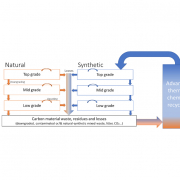
STADLER’s sorting plants enable the separation of CDW into different fractions, which can have a broad range of applications. They can substitute raw construction materials such as sand, gravel, metal, wood and many more. Recovered concrete can be used to produce recycled concrete. Recovered fractions from CDW can also be utilized to innovate and produce new materials, such as inorganic polymers and glass-ceramics. “This means that with recovery not only is it possible to close the loop in material life cycles and move towards a circular economy,” concludes Hernández Parrodi, “but it also enables upcycling, consequently expanding the applications and increasing the added value of recovered materials.”
For more information, visit: w-stadler.com
Source: Alarcon & Harris / STADLER (Altshausen, 12 May, 2022)