Used Textiles in Europe: Separate Collection for More Recycling
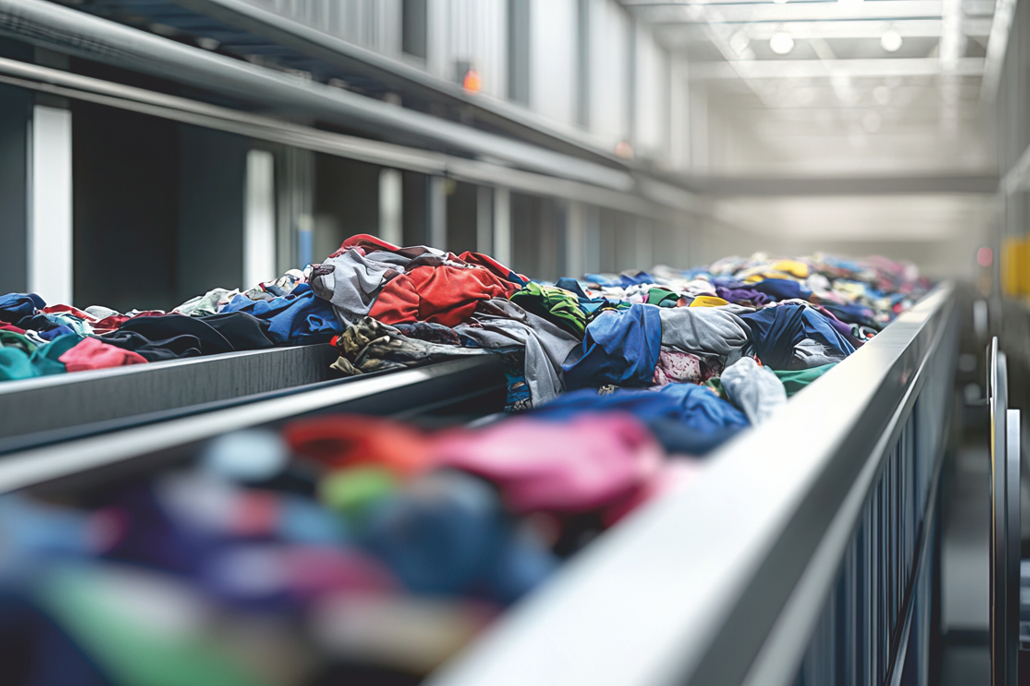
The European Waste Framework Directive requires all EU member states to set up separate collection systems for used textiles from 2025.
The European Waste Framework Directive is part of the implementation of the “EU Strategy for Sustainable and Circular Textiles”. According to the European Union, this strategy addresses the production and consumption of textiles, whilst recognizing the importance of the textiles sector. “It implements the commitments of the European Green Deal, the Circular Economy Action Plan, and the European industrial strategy.”
Textiles are the fabric of everyday life – in clothes and furniture, medical and protective equipment, buildings and vehicles. “However, urgent action is needed as their impact on the environment continues to grow. EU consumption of textiles has, on average, the fourth highest impact on the environment and climate change, after food, housing and mobility. It is also the third highest area of consumption for water and land use and fifth highest for the use of primary raw materials and greenhouse gas emissions,” the EU Commission stated on its homepage. The strategy would look at the entire lifecycle of textile products and proposes coordinated actions to change how the Europeans produce and consume textiles. Its goal is to create a greener, more competitive textile sector that is better equipped to withstand global challenges.
The Commission’s 2030 vision for textiles is that
- all textile products placed on the EU market are durable, repairable and recyclable, to a great extent made of recycled fibers, free of hazardous substances, produced in respect of social rights and the environment;
- ”fast fashion is out of fashion” and consumers benefit longer from high quality affordable textiles;
- profitable reuse and repair services are widely available;
- the textiles sector is competitive, resilient and innovative with producers taking responsibility for their products along the value chain with sufficient capacities for recycling and minimal incineration and landfilling.
Relating thereto is a forward-looking set of actions. The Commission will
- “Set design requirements for textiles to make them last longer, easier to repair and recycle, as well as requirements on minimum recycled content;
- Introduce clearer information and a Digital Product Passport;
- Reverse overproduction and overconsumption, and discourage the destruction of unsold or returned textiles;
- Address the unintentional release of micro plastics from synthetic textiles;
- Tackle greenwashing to empower consumers and raise awareness about sustainable fashion;
- Introduce mandatory and harmonized Extender Producer Responsibility rules for textiles in all Member States and incentivize producers to design products that are more sustainable;
- Restrict the export of textile waste and promote sustainable textiles globally;
- Incentivize circular business models, including reuse and repair sectors;
- Encourage companies and Member States to support the objectives of the strategy.”
environment.ec.europa.eu/strategy/textiles-strategy_en
Examples of initiatives
Of course, recycling plays an important role: In 2020, the European project “New Cotton” started; it ended in March 2024. As reported by CORDIS, the information provider about EU Research & Development projects, the textile industry generates 1.2 billion tons of CO2 per year since huge quantities of textile waste are landfilled or burned. “However, existing solutions cannot resolve the problem, and there is a lack of feasible alternatives in the market. As the production of textiles is expected to rise by 63 percent by 2030, the textile industry has agreed with government institutions, environmental organizations, and consumers to move towards sustainable production and consumption.”
The EU-funded “New Cotton” project aims to introduce cellulose carbamate technology, which will enable the transformation of textile waste into cost-effective, cotton-like fibers with enhanced qualities. The technology, based on the technology pioneered by Infinited Fiber Company in Finland, could process cotton-rich textile waste, including mixed fibers, and other cellulose-based waste feedstocks into new fibers and textiles.
The result of the project was as expected. By using advanced recycling technologies, sorted waste was transformed into high-quality fibers called “Infinna”. These fibers, which are made entirely from 100 percent textile waste, were spun into yarns, woven into fabrics and crafted into garments, CORDIS gave account.
As reported on the project’s homepage, twelve partners participated in the “New Cotton” project and each had “a unique role in defining a blueprint for circularity in textiles. Infinited Fiber Company created cellulose-based textile fibers (cellulose carbamate fibers) out of post-consumer textile waste. Frankenhuis and Xamk worked on the preprocessing and research for the pretreatment of textile waste. Manufacturers Inovafil, Tekstina, and Kipas used the regenerated fibers to produce yarns, woven fabrics, and denim respectively. RE-volve Waste, RISE, and Aalto University, collected and provide data, and conducted research and analysis. Fashion for Good lead on the communications to the industry. Design and manufacture of the fibers into clothing was done by companies in the H&M group and Adidas”.
cordis.europa.eu, newcottonproject.eu
Sweden-based company The Loop Factory, founded in 2014, aims to provide a collaboration platform and foster an entrepreneurial culture for technology and material-driven innovations. Their goal is to help partners scale sustainable innovations more quickly. “With our expertise in innovation strategy, renewable materials, and unused resources, we design, test, and speed up innovative circular concepts together with our partners,” one can read on the company’s homepage. The firm works with local and global partners, “ranging from ambitious entrepreneurs and the public sector to global corporations”.
The Loop Factory has published suggestions to prepare small and medium-sized enterprises (SMEs) for the new regulations. The recommendations include:
- “Data is extremely valuable within EPR schemes. This includes data on sales volumes, geolocation of materials and products, accurate location inventory, and evidence supporting the impact of sustainability.
- Relationship management with producers and customers is essential to collecting all this data.
- Investigate opportunities to extend the product life or handle unsold goods – for example, repair, redesign, rental, renovation, second-hand, recycling, etc.
- Optimize material consumption in production and products.
- Design for circularity – for example, modular design.
- Oversee current environmental claims in marketing and set up a strategy for verifying the claims.”
(Published in GLOBAL RECYCLING Magazine 1/2025, Page 32, Photo: Liera / stock.adobe.com)