
A Global Effort Against E-Waste
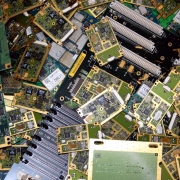
The proliferation of electric and electronic products has brought many advantages. Fuelled by innovation and ever lower costs, they have boosted growth and development, expanded education, and enabled connectivity. However, the growing volumes of e-waste have been the consequence. According to the latest Global E-waste Monitor, 53,6 million tonnes of electrical and electronic waste was generated in 2019. At current rates, a projected 74,7 million tonnes will be reached by 2030.
The cost of e-waste is high for the environment. If not properly disposed, e-waste releases toxic substances that can seep into the air, water and soil. For this reason, many countries have placed obligations on manufacturers to ensure that their products are properly recycled and disposed once they reach the end of their usefulness. With extended producer responsibilities, manufacturers are responsible for the product throughout its lifecycle, including product take-back, recycling and final disposal.
Yet, extended producer responsibility has not been made obligatory in all parts of the world. According to Christian Dworak, Convenor of the IEC working group on e-waste (IEC TC 111 WG 18), current studies estimate that approximately one-third of e-waste is handled by official channels and properly tracked and disposed. However, “the remaining two-thirds is disappearing. While it is assumed that some of this waste may be reused or recycled, it is not clear how much,” remarks Dworak.
Initiatives to combat the problem of e-waste have been put in place in a number of countries. For example, Japan introduced its Home Appliance Recycling Law in 2001, which places the responsibility of disposal at the end of product life on producers. Similarly, the European Union has enacted the Waste of Electrical and Electronic Equipment Directive in 2005 to ensure the efficient use and recovery of resources.
While similar measures have been implemented in South Korea, China and North America, e-waste is a growing problem for some countries in Africa where legal obligations are non-binding. As Dworak notes, “we see many container ships going to Africa and there are many examples of products having a second use. But after the second or third use, how do we address waste when there is little recycling?”
He continues, “e-waste does not stop at national or regional borders. There is a need for a worldwide joint approach to the treatment and the preparation for the reuse of e-waste.”
IEC tackles e-waste
In May, the IEC agreed to move forward with a new project that addresses e-waste. Led by Dworak, this proposed horizontal standard aims to facilitate the systematic, sustainable management of e-waste. Among its objectives, it seeks to reduce the amount of e-waste sent for disposal through reuse and recovery, prevent the inappropriate disposal of e-waste and restrict operators who do not comply with the standard or comparable requirements from receiving e-waste shipments.
According to Dworak, “this new project on e-waste is the first time that product end-of-life management of waste is addressed by the IEC. We have had discussions on product design and performance but never discussed requirements on how to operationally handle worldwide product extended producer responsibility, reuse and recycling.”
A kick-off meeting is expected to take place in September. Interest in this work is high and efforts are now underway to ensure the involvement from all parts of the world. As Dworak remarks, “We are now trying to connect African countries to this work since they are greatly impacted by e-waste. This needs to be an international effort.” Liaisons are also underway with ITU-T Study Group 5 (SG5) on the environment and climate change.
Widening the concept of waste
In many parts of the world, discussions have begun on the concept of the circular economy which calls for a radical shift in production and consumption. Continual cycles recover and restore products, components and materials through strategies such as reuse, repair, remanufacture and, ultimately, recycling. Within the IEC, standardization efforts are underway to address issues related to the circular economy. For example, TC 111 is developing horizontal standards related to material circularity, methods for assessing the proportion of reused components in products and the requirements for the environmentally conscious design of products.
“These discussions,” notes Dworak, “have brought new light on the subject of waste which had traditionally been perceived as having no economic value. We are now having interesting discussions on how we define waste and who has the ownership and the legal rights to it.”
According to the make, use and waste hierarchy of the circular economy, when a product reaches the waste phase, much of its value has been lost. Yet, it is possible to keep the materials of the product in use. The Chair of IEC Advisory Committee on Environmental Aspects (ACEA), Solange Blaszkowski commented, “waste should be seen as a resource. The aim is to ensure we have as little waste as possible with the ultimate objective of keeping material in use forever.”
Beyond e-waste, the issue of waste management in general will need to be addressed together with ISO. For example, plastic which is used in electronic products, can be treated and made available for a second use in another type of product. Through industrial symbiosis, waste or by‐products of one industry can become the raw material for another industry or industrial process. Blaszkowski remarks, “Discussions between IEC and ISO are underway on issues related to the environment and will also need to include a wider discussion on the concept of waste.” Efforts to define the terminology for concepts related to the circular economy including waste, is currently underway in a joint working group in the IEC (IEC TC 1 JWG 2) with the participation of two ISO committees and ITU-T SG5.
As Dworak concludes, “Today we have many worldwide standards produced by the IEC which deal with the eco-friendly design of electrical and electronic products. This is a very good starting point. With the new project we want to ensure that all the efforts made in the design phase will continue when dealing with the end of life of products. In order to lever the full effects of a circular economy, we should focus on putting into place high quality, end of life treatment and recycling processes.”
Source: IEC – International Electrotechnical Commission (Geneva, June 30, 2021)