
Plastic’s Role in Reducing CO2 Emissions
[Author: Mark McKenna] According to Global Footprint Network data, 29 July marked the date when our global population has taken more from nature than the earth can regenerate in a year. If that is not enough to make us sit up and pay attention then the world’s unusual weather patterns with freak storms and flooding should, at the very least, be taken as a serious sign that everything from the way we ‘consume’ to what we ‘emit’ needs to come under close scrutiny.
Reaching net zero by the middle of the century is now a global target, and one of the multitude of actions we need to take to achieve this involves plastic.
When it comes to exploring solutions to reduce our carbon emissions, it is not often that plastic packaging is considered. We are so busy trying to limit our dependence on plastic that we risk overlooking its potential CO2 reducing role.
As leading food packaging suppliers we consider every aspect of the materials we use and this involves the level of protection they offer through to their weight, recyclability and appearance. Enhancing food protection is key as this reduces food waste, yet it has to be balanced with the weight of the packaging to reduce its transport footprint.

Mark McKenna (Source: Mannok)
When it comes to packaging’s recyclability, lean packaging designs are definitely preferable – this means the polymer type should be easy to identify and kept within a narrow range of polymers (LLDPE, HDPE, PP and PET) – this would simplify and enhance recycling and ensure we get the same material and performance we put in.
A significant amount of our food packaging is produced from Polypropylene (PP) as it is extremely light as well as strong. The only downside is that whilst it is recyclable, it does not get turned back into food packaging due to the risk of contamination. As such all food-grade PP packaging is produced from virgin PP.
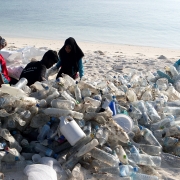
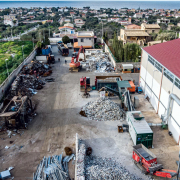
Currently all post consumer PP packaging is either being downcycled into low performance applications or going to waste-to-energy or landfill. Either way it is a real waste of precious resources.
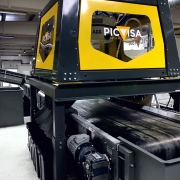
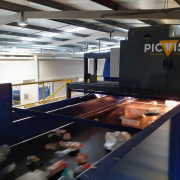
Which is why the advent of food-grade recycled PP (FGrPP) is set to transform the food packaging sector. NEXTLOOPP’s multi-participant project is poised to create a circular economy for food-grade PP packaging waste, which, is likely to drastically reduce the production of virgin plastics from petrochemicals and in turn reduce CO2 emissions and divert waste from both landfill and lower quality plastics.
The figures speak for themselves, the production of one tonne of recycled PP saves approximately 1.7 tonne of CO2 emissions. If the UK meets the 30% recycled content target for food contact PP packaging alone, it will create annual savings of 63,000 tonnes of virgin PP and 107,000 tonnes in CO2 emissions, which equates to planting more than 1 million trees.
From our perspective those retailers and brands striving to meet the 30% recycled material target by 2025, not to mention avoid the UK’s plastic packaging tax of £200/tonne from April 2022, are likely to see immediate benefits.
So if we are to stop depleting the planet by wasting its resources, consider plastic waste next time it comes up in the CO2 conversation, if managed properly, plastic can play a role in reducing rather than exacerbating our CO2 levels.
Source: Mark McKenna, Mannok (Ireland, August 03, 2021)