
Solar Panel Recycling Market to Reach USD 2.1 Billion by 2033
As global solar capacity advances toward multi-terawatt levels, a critical question is emerging alongside the expansion of photovoltaic (PV) infrastructure: what happens when solar panels reach the end of their operating life? This question now guides the evolution of the Solar Panel Recycling Market, a sector gaining momentum as decommissioned PV modules increase and resource efficiency becomes essential.
According to Research Intelo, the global solar panel recycling market was valued at USD 0.34 billion in 2024 and is projected to reach USD 2.1 billion by 2033, expanding at a CAGR of 22.5% from 2025 to 2033. This growth reflects the rising urgency and economic potential of a circular PV ecosystem.
What Is Driving the Need for Solar Panel Recycling?
The first large-scale wave of solar installations from the early 2000s is approaching end-of-life. With panels lasting 25–30 years, the volume of modules entering the waste stream is accelerating. Key forces shaping the market include:
- Rising Volume of Decommissioned Panels:
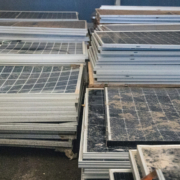
The global surge in solar installations over the past two decades is now creating substantial end-of-life waste. Efficient recycling is becoming essential to recover valuable materials and prevent environmental strain, prompting action from policymakers, manufacturers, and utility operators.
- Technological Innovation and Automation:
Advanced recycling technologies, such as automated mechanical separation, chemical leaching, and thermal treatment, are improving material recovery rates and cost efficiency. Integration of robotics, AI, and IoT systems is further optimizing dismantling, sorting, and material extraction, reducing labor intensity and environmental impact.
- Evolving End-user Demand and Sustainability Priorities:
Widespread adoption of solar energy across residential, commercial, industrial, and utility sectors is driving the need for responsible end-of-life management. As more panels reach retirement age, organizations are prioritizing eco-friendly disposal and certified recycling to align with sustainability commitments.
- Regulatory Support and Incentives:
Governments are introducing strict regulations and extended producer responsibility (EPR) frameworks requiring manufacturers to manage end-of-life modules. Financial incentives, including grants, subsidies, and tax benefits, are accelerating investment in recycling infrastructure and circular-material recovery initiatives.
Which Regional Markets Are Dominating the Recycling Landscape?
- Europe
Europe holds the largest market share, driven by a mature solar ecosystem, stringent environmental policies, and advanced recycling infrastructure. The EU’s WEEE Directive mandates PV recycling, prompting strong participation from manufacturers and recyclers. Countries such as Germany, France, and the Netherlands have established efficient collection and processing networks with high recovery yields.
- North America
Recycling adoption is accelerating, especially in the U.S., where states such as California and Washington have introduced PV-specific waste rules. Industry-led initiatives and technology startups are expanding capacity.
- Asia Pacific
Massive solar deployment in China, India, Japan, and South Korea is generating increased volumes of retired modules. Investments in recycling facilities and supportive policy frameworks are enabling the development of localized recycling ecosystems.
What Technologies Are Redefining the Recycling Process?
- Mechanical Recycling:
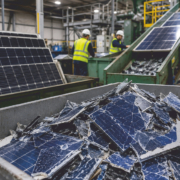
Widely used for initial dismantling, involving shredding, crushing, and sorting to recover bulk materials such as glass, aluminum, and copper.
- Thermal Processes:
Uses controlled heating to remove encapsulants and isolate metals and silicon with minimal contamination.
- Chemical/ Hydrometallurgical Techniques:
Employ solvents and leaching agents to extract high-value materials like silver, indium, and rare elements from photovoltaic cells, supporting high-purity recovery for reuse.
What Business Models Are Emerging?
The rise of solar panel recycling is giving shape to several distinct business strategies:
- Producer Responsibility Partnerships: Manufacturers collaborating with recyclers to comply with extended producer responsibility (EPR) rules.
- Recycling-as-a-Service: End-to-end waste management packages for utility-scale operators and EPC companies.
- Decentralized Mobile Recycling Units: Portable systems reducing logistics costs for remote solar farms.
- Material Recovery Specialists: Companies targeting specific components—e.g., silver extraction or glass recovery.
What Are the Key Challenges to Market Development?
Despite strong momentum, several barriers persist:
- Regulatory inconsistency across regions
- Volatility in recovered material prices, affecting profitability
- Lack of standardized recycling protocols for diverse panel types
- High operational costs associated with advanced recovery methods
Addressing these issues will require harmonized regulations, technology standardization, and sustained investment in innovation.
Is the Sector Poised for Large-Scale Commercialization?
Indicators point to significant expansion:
- Growth in utility-scale solar installations
- Increasing regulatory mandates and financial incentives
- Rising integration of recycled materials into new module manufacturing
- Declining costs of advanced recycling technologies
These factors position the recycling sector as a strategic component of solar supply-chain resilience.
Conclusion: Will Solar Recycling Become the Backbone of a Circular Energy Transition?
The solar panel recycling market stands at a pivotal intersection of environmental necessity and economic opportunity. As renewable energy infrastructure grows, the ability to recover, reuse, and repurpose PV materials will play a defining role in the sustainability of the energy transition.
Whether the sector evolves into a fully integrated circular economy will depend on regulatory clarity, technological advancement, and material recovery economics. However, one trend is clear: the future of solar extends beyond power generation to the creation of circular, resource-efficient systems that endure well beyond the lifespan of the panels themselves.
https://researchintelo.com/report/solar-panel-recycling-market
Source/Photo: Research Intelo (16.12.2025)