Waste Management and Circular Economy: Investment Opportunities in Kenya
The Kenyan government is convinced that investments in waste management and circular economy could be an opportunity for commercial, socioeconomic and environmental returns.
In 2021, the Republic of Kenya published the National Sustainable Waste Management Policy. In accordance with article 42 of the national constitution, “every person in Kenya is entitled to a clean and healthy environment and has a duty to safeguard and enhance the environment,” Keriako Tobiko, Cabinet Secretary of the Ministry of Environment and Forestry, stated in the preface of this document. Moreover, the national Vision 2030 says the country “aims to be a nation living in a clean, secure and sustainable environment hence lessen by half all environment related diseases”.
Therefore, addressing the waste management challenge effectively is an important step of the country on the way to a circular economy, which would create green jobs and wealth from the waste sector, and realize the nation’s sustainable development goals. “Sustainable waste management is also fundamental to delivery of each of the government’s ‘Big Four’ national priorities – the transformational agenda on housing, manufacturing, food and nutritional security and health care – and to Kenya’s leadership in the blue economy, with its focus on creating economic growth, ensuring healthy waters and building safe communities”. In 2022, the Sustainable Waste Management Act was published in the Kenya Gazette Vol. CXXIV – No. 158 on 12 August 2022.
No systematically collected data, but estimates
As reported in 2021, the East African country generated an estimated 22,000 tons of waste per day calculated by assuming an average of per capita waste generation of 0.5 kilograms for a population of then 45 million; this meant an amount of eight million tons annually. According to extrapolations, 40 percent of the waste was generated in urban areas. However, at that time forecasts anticipated urbanization would increase by ten percent by 2030 and the urban population would be generating about 5.5 million tons of waste every year. “Past inventories estimate that 60 to 70 percent of waste generated is organic, 20 percent plastic, 10 percent paper, 1 percent medical waste and two percent metal. Inefficient production processes, low durability of goods, unsustainable consumption and production patterns lead to excessive generation of waste,” the policy document stated. Due to the absence of systematically collected data on waste streams in Kenya, the main sources of waste were households, manufacturing, commerce, health care, agriculture, waste treatment, construction industry and mining waste. The municipal waste was often unsorted and contaminated – the problem is still relevant up to today. “Despite efforts to encourage reuse, recycling and recovery, the amount of solid waste generated remains high and appears to be on the increase,” the information said.
At that time, approximately 40 percent of the population in many parts of major cities received waste management services; in areas of low income and informal settlements, there were no waste collection systems at all. “All counties in Kenya currently have uncontrolled waste dumpsites where leachate pollutes waterways and underground aquifers, and where burning waste emits toxic air and noxious fumes that contaminate the air,” the policy paper described the situation. “There is no systematic waste segregation at the source and the recovery of recyclable items like plastics, papers, glass and metals is done by informal waste picker groups who recover only a fraction of the total recyclable materials, mostly directly from the dumpsite. Informal waste pickers at these dumpsites are exposed to toxic chemicals (from batteries and other waste and burning plastics) air pollution and pests that spread disease.”
There is recycling
Regarding recycling, initiatives existed across the country in 2021. For example, waste pickers were organizing into cooperatives. The same applied to programs to create jobs in waste collection, sorting and recycling for youth and women. “In some areas, Kenyan entrepreneurs have launched small scale production of organic compost from organic waste. Small-scale, artisanal recycling of glass, plastic and metal is converting some waste into crafts for the domestic and international market.”
The Kenyan county governments were also active and had contracted private waste management firms to collect garbage, transport and dispose waste and other related services. Many counties also supplied bins, liners and collection bags. At that time, in wealthier areas, waste was collected twice a week, while in middle-income areas, it was collected once a week, and in low income and margin areas there was no waste collection at all. “Franchising systems for waste collection have been tried by a number of counties whereby a county is zoned, and private sector firms assigned to deliver waste management services to the designated zones and are in charge of both fee and waste collection,” the policy paper gave account. “This approach has not been efficient as the firms compete for contracts in the wealthier areas but decline to service poorer areas and are vulnerable to corruption.” The system would rely on the under-resourced public sector for enforcement.
Moreover, waste recycling companies had indicated that extracting recyclable materials was often impossible in practice, as most household waste had not been sorted; cleaning recyclables that have been comingled with waste would be expensive. In 2021, recycling companies were also faced with challenges including opaque regulatory requirements, a multiplicity of licenses and charges, lack of distinction in licensing of waste collection and recycling companies. Additionally, a lack of sufficient controls at recycling sites were frequently leading to their use as dumpsites rather than materials recovery centers. “The high level of privatization of waste management services by counties without proper regulation and enforcement has also led to uncoordinated delivery of waste services to citizens,” the paper stated. “Strict regulation and enforcement of waste services provision by the private sector in Kenya is crucial.” The described situation is changing with the policy developments, including the Sustainable Waste Management Act and Extended Producer Responsibility (EPR) frameworks, which are helping to create a more enabling environment for investment.
The multi-million Dollar opportunity
Today, Kenya has the potential to position itself as the anchor of the circular economy in East Africa and the wider region, the country’s investment authority is convinced. As underlined, Kenya’s waste streams would represent a significant and untapped economic opportunity.
Research by the National Environment Management Authority (NEMA) would suggest that by 2030, the country could unlock economic gains from the circular economy. A value of about 730 million US-Dollar is expected from agro-food, plastics, construction, electrical and electronic equipment (EEE) and e-waste, plus general waste. Furthermore, 335 million US-Dollar are projected from secondary material sourcing. As also estimated, the export could grow by 40 million US-Dollar.
A current prospect titled “Waste Management and Circular Investment Opportunity in Kenya”, published this year by the country’s Ministry of Investments, Trade and Industry in tandem with the national investment authority Invest Kenya, would set out where and how private capital could accelerate the country’s circular economy and waste transition over the next years. It was developed by a collaboration between Invest Kenya, Systemiq, a system change company systemiq.earth, ALN Kenya, an alliance of leading law firms aln.africa and TakaTaka Ni Mali, an organization dedicated to connections in the waste management ecosystem in Kenya takanimali.org.
As emphasized, the prospect is intended to support more coordinated action between policymakers, investors, businesses and development partners. It would identify four investor archetypes across circular value chains, outline the enabling policy landscape, and present a pipeline of scalable opportunities – providing practical pathways for investor engagement and clarity on what needs to happen to move from ambition to implementation in building a more resource-efficient and inclusive economy.
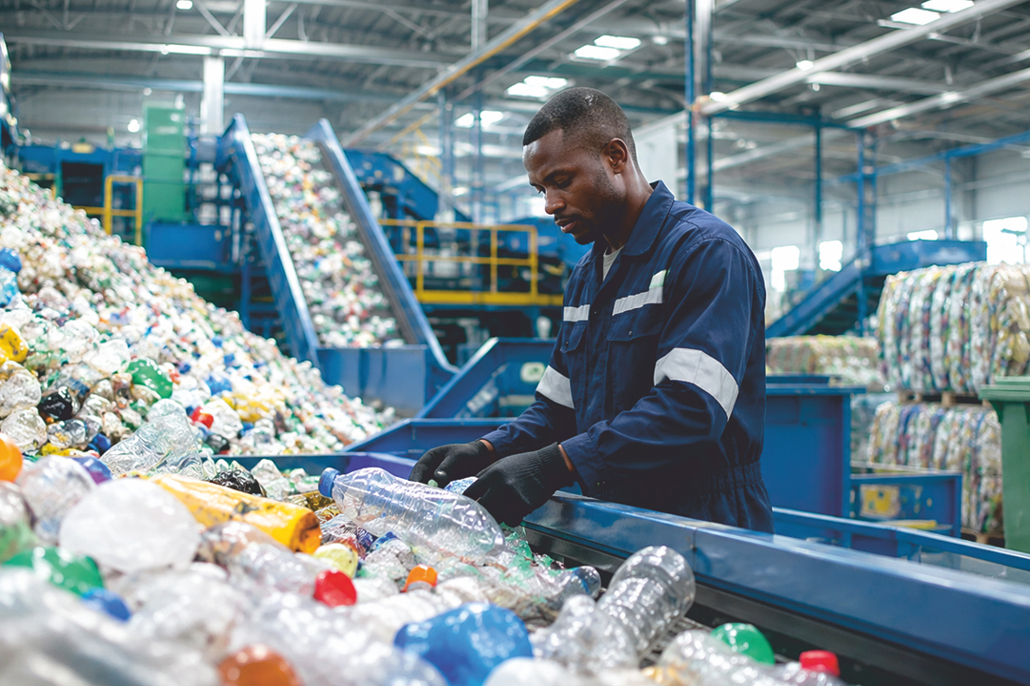
(Published in GLOBAL RECYCLING Magazine 3/2026, Page 3, Photo: MSV, AI-generated)