PET Recycling in Pakistan
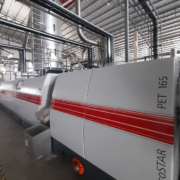
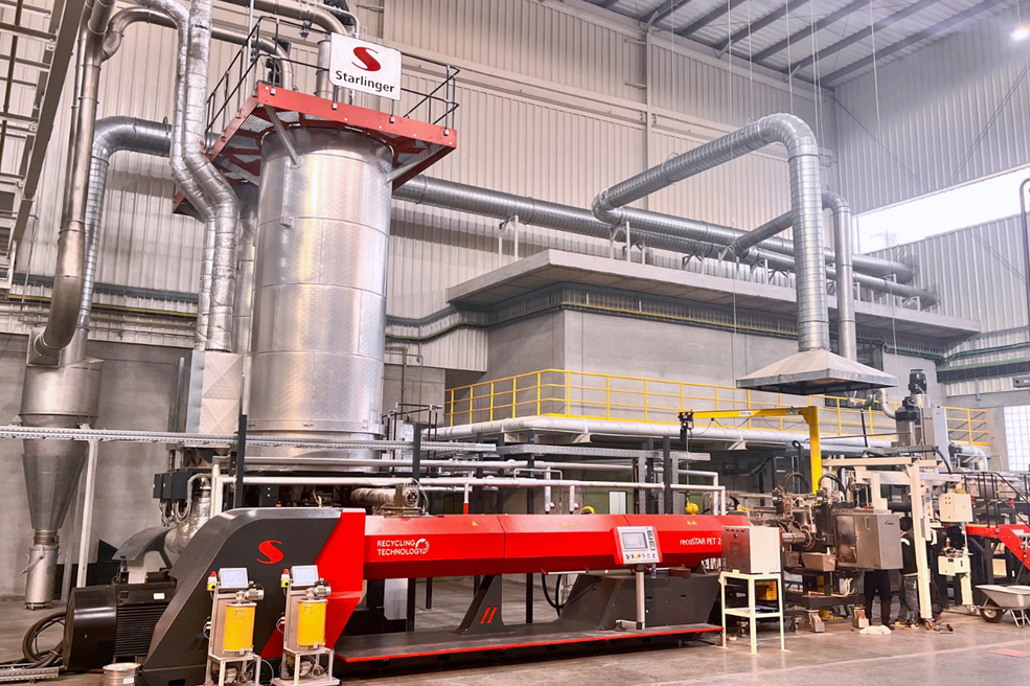
PET producer Novatex Ltd. has expanded its product portfolio by investing in bottle-to-bottle recycling of collected post-consumer PET bottles. The company is now producing bottle-grade recycled PET at its facility in Quaid-e-Azam Business Park near Lahore, using the recoSTAR PET 215 art bottle-to-bottle recycling system supplied by Austrian recycling technology specialist Starlinger.
According to Rizwan Diwan, CEO at Novatex Ltd., the company wants to support its partners PepsiCo, Coca-Cola and others to meet their circularity targets. “The produced rPET has all the necessary food-contact certifications and is being used by all major brands. In addition, the government of Pakistan is pushing hard to eliminate single-use plastics and plastic waste.” With the Starlinger bottle-to-bottle recycling system, the company is able to produce up to 3,000 kilograms of food-contact rPET per hour, which amounts to an annual production output of more than 24,000 tons. Novatex sources the post-consumer PET bottles mostly from municipal curbside collection across Pakistan.
The produced rPET chips are used in the company’s own PET preform production or sold on the local and international market. Pakistan does not yet have a national mandatory recycled content quota for plastic packaging comparable to the EU’s Packaging and Packaging Waste Regulation (PPWR); thus, brand owners – in Pakistan mainly PepsiCo – are leading the path for rPET inclusion.
Pakistan’s Roadmap to reduce plastic waste
As reported by Starlinger, studies and surveys estimate that Pakistan generates around 3.12 million tons of plastic waste annually, of which only four to nine percent is recycled. With plastic use increasing by 15 percent annually – largely driven by single-use products – and plastics making up almost 40 percent of the solid waste in the Indus River, the country is confronted with environmental and public health challenges.
Pakistan’s efforts to tackle plastic waste, however, are still evolving; a fully consolidated framework with binding national laws has not yet been established. In the last year, the country has moved from plastic bans and pilot initiatives in individual provinces toward a more coordinated national approach, but implementation remains uneven. In April 2025, the Government of Pakistan, together with the United Nations Development Programme and the World Economic Forum, launched the National Plastic Action Partnership (NPAP) Roadmap, which is currently the most important framework for plastics waste management at the national level. The roadmap aims to reduce plastic pollution, improve waste collection and recycling, expand circular plastic solutions, integrate informal waste pickers, promote public awareness, and encourage sustainable packaging and business models.
To this effect, Pakistan is moving towards a national system to make companies responsible for the waste created by their packaging. Food and beverage companies, NGOs, recyclers and packaging producers have formed the so-called CoRE Alliance and, in 2025, joined government representatives in calling for a national Extended Producer Responsibility (EPR) framework. Under such a model, companies bear the cost of collecting, recycling and safely disposing of their packaging waste. The producer responsibility organizations for handling this, however, have yet to be established.
(Published in GLOBAL RECYCLING Magazine 3/2026, Page 34, Photo: Starlinger)