“Chemical Recycling has Huge Potential”
According to the German industry association Verband Deutscher Maschinen- und Anlagenbau (VDMA), chemical recycling has recently been presented more and more often as a solution to the plastics problem.
As emphasized, the future perspective is that plastics from various applications that cannot be recycled mechanically can be broken down to their basic components using chemical processes and, therefore, be put to new, high-quality utilization. In an exchange with experts from the involved stakeholders, the trade associations Plastics and Rubber Machinery and Waste and Recycling Technology are discussing in which areas and to what extent chemical recycling can complement the established recycling processes.
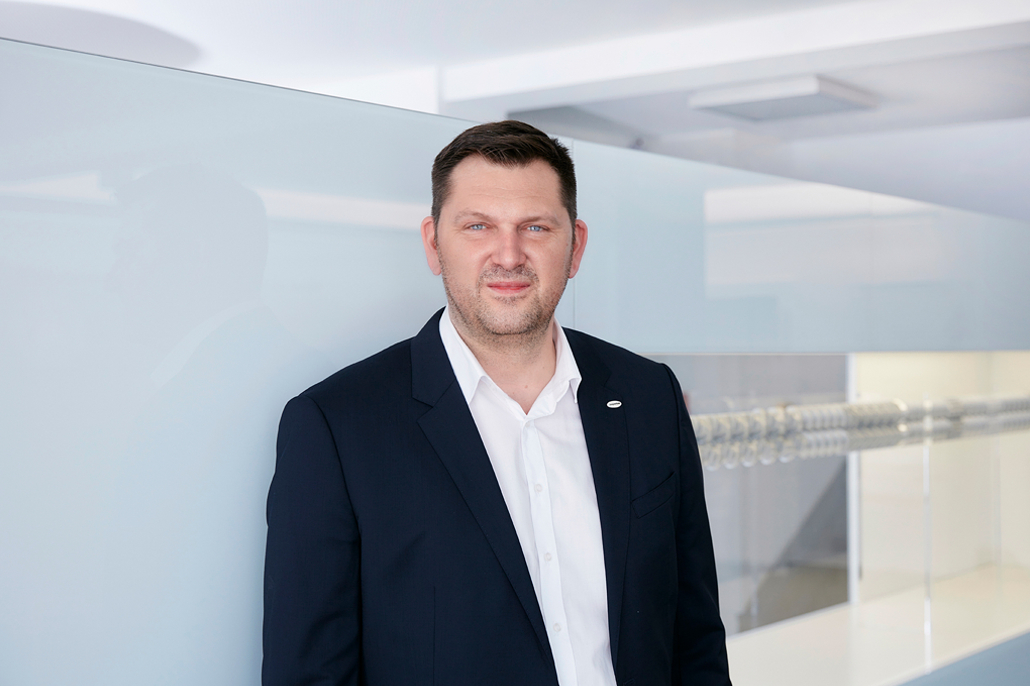
In the VDMA series “Let’s talk about Chemical Recycling”, Jochen Schofer, Head of Sales of the Recycling Business Unit at Coperion GmbH, evaluates the current development.
Mr. Schofer, what contribution can chemical recycling make to the circular economy?
In principle, it can make a big contribution. But it only works properly together with mechanical recycling. And it will only work if the circular economy is accepted not just in Germany or Europe, but throughout the world. In many parts of the world, however, there are still either only fragmented waste collection systems, depositing systems and similar systems, or none at all, that are able to generate a sufficient waste stream for recycling. At the moment, an increasing number of large corporations are jumping on the chemical recycling bandwagon, all of them operating internationally. There is hope that they will contribute considerably towards the implementation of the necessary infrastructure in all parts of the world.
Chemical recycling has huge potential. The results achieved so far are very promising. Nevertheless, chemical recycling is still in its infancy, while mechanical recycling is already established. Chemical recycling has particular potential because there are many plastics that cannot be processed mechanically, and more and more will be added. For example, in the construction sector, think of the many mixed plastics that are released when a house is demolished, or in the automotive industry. That is precisely why chemical recycling has to make a big contribution to the circular economy.
In which areas is chemical recycling superior to mechanical recycling?
The major advantage of chemical recycling over mechanical recycling is that it can be used to recycle all types of plastic. You no longer need a single type of material stream, as you do with mechanical recycling – for example, only polyethylene or polypropylene. Chemical recycling can also be used to recycle composites. However, the prerequisite is that you have a large material stream, because only then can the process be operated economically. Some large plants for chemical recycling with throughputs of up to 25 tons per hour are already being planned.
Which recycling method does the machine manufacturer Coperion primarily rely on?
As a machine builder, we have made it our goal to support the plastics industry as best we can on its path to a circular economy. We develop solutions for chemical recycling, mechanical recycling, and even for many other processes, such as solvent-based recycling. Here, two different polymers are separated from each other, and the solvent is degassed in the extruder. We offer technologies for processing all plastic material streams for well-sorted as well as poorly sorted ones. But the question is whether you put the energy into pre-sorting or, in the case of chemical recycling, into processing the oil quality afterwards. Because the worse the product to come out of the reactor, the more processing it requires. Here, too, it’s all about economic efficiency in the end. Because the chemical recycling process is very energy-intensive, it is advisable to focus more on the upstream steps in the case of high throughputs. For smaller plants, it may also make economic sense to invest in processing the recovered oil.
Were there any technological challenges?
As pioneers in processing technology for virgin plastics, we have modified our product range in such a way that we can also serve the recycling market with innovative solutions. In recycling, we deal with contaminated materials, low bulk weights or high moisture contents. Therefore, we have made many developments, adjustments and optimizations to our technologies. Especially for chemical recycling, for example, we have developed a new technique that makes it possible to reliably degas chlorides directly in the extruder.
Will the waste problem be solved through the circular economy?
Both systems, mechanical and chemical recycling, are not silver bullets. Both make a great contribution to solving our waste problem, but much more needs to be done. Above all, product design should completely avoid poorly recyclable plastics. Because if more and more poorly recyclable plastics enter the market, they threaten to end up being burned instead of recycled. A great contribution would therefore be to simply not produce and use the poorly recyclable plastics in the first place. That should be our first goal for a functioning circular economy.
vdma.org/plastics-rubber-machinery, coperion.com/en/
(Published in GLOBAL RECYCLING Magazine 3/2023, Page 23, Photo: Coperion GmbH)