Bright Perspective for Recycled Plastic
Legally binding policies are shaping material flows and securing predictable market growth, Astute Analytica India Pvt. Ltd. underscored, as the global market research and advisory company announced its latest market report.
In 2024, the global recycled plastics market was valued at 50.80 billion US-Dollar. By 2033, it is expected to reach 102.40 billion US-Dollar, growing at a compound annual growth rate (CAGR) of 8.1 percent. “Tangible demand in the recycled plastics market is accelerating, boosted by legally binding regulations and large-scale corporate procurement,” the information said. “EU producers will need to source about 5.4 million tons of rPE, rPP, and rPET annually by 2030 to fulfill the Packaging and Packaging Waste Regulation mandates. This figure is forecast to climb to 11.5 million tons per year by 2040 as rules expand.”
And in the USA, state-level actions, such as California’s mandate for 50 percent recycled content in beverage containers by 2030, would make significant regional demand pulls. Major brand owners were translating sustainability goals into substantial, fixed demand. “The Coca-Cola Company used 488,000 metric tons of rPET in 2023. Unilever’s annual consumption has surpassed 164,000 tons. These volumes deliver the long-term offtake certainty required for recyclers to invest in new capacity. Further solidifying this demand, new investments are adding significant capacity. For instance, ExxonMobil’s planned expansions in Texas will add 350 million pounds of annual advanced recycling capacity by 2026. Waste Management is also adding three new facilities in 2024 to increase its capacity by one million metric tons by 2026.”
Recycled content in consumer goods
As reported, beyond packaging, the demand for recycled content in consumer electronics and durable goods is becoming a significant force in the recycled plastics market. Major tech companies are now combining substantial volumes of recycled materials into their products. For instance, HP Inc. has already utilized more than a cumulative one billion pounds of recycled plastic in its printers and computers. Dell is aiming to make more than half of its product content from recycled or renewable materials by 2030. “These commitments require sourcing hundreds of thousands of tons of high-quality recycled polycarbonate, ABS, and other engineering plastics.”
According to Astute Analytica, this demand is fueling investment in specialized e-waste recycling infrastructure. Aurubis had recently opened its first recycling plant in the USA (Georgia), which is to process more than 180,000 tons of materials like recycled electronics annually. “As companies increasingly design products for circularity, the demand for recycled plastics in long-lasting goods will grow,” the market research firm is convinced. “This trend diversifies the recycled plastics market away from its conventional reliance on single-use packaging and creates stable, high-value end markets for materials recovered from a broad range of post-consumer products.”
Recycled plastic bottles
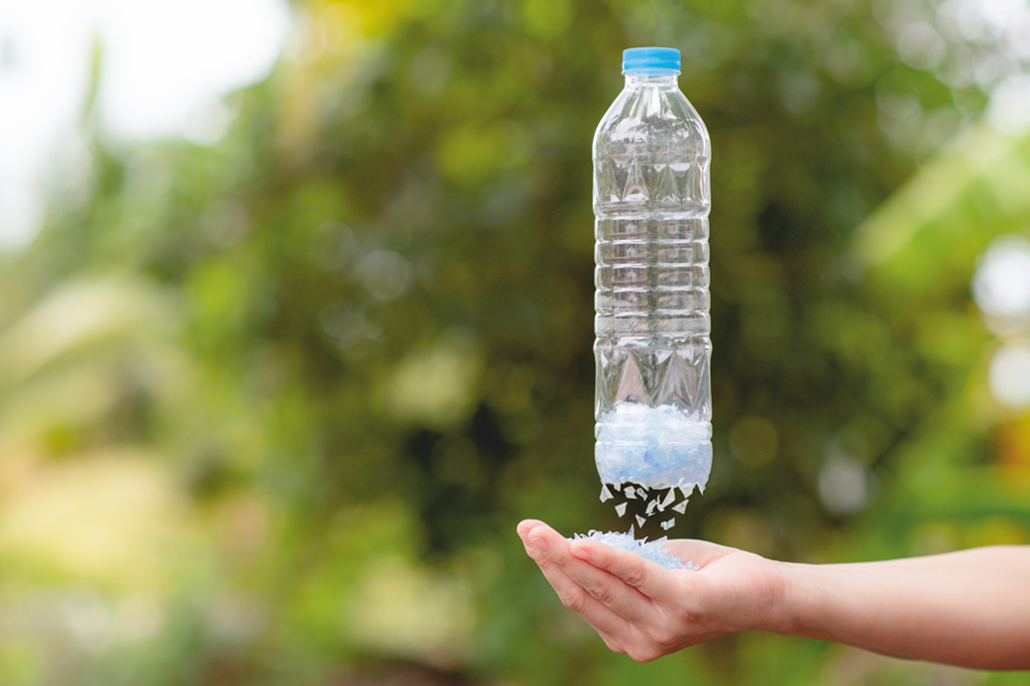
Plastic bottles hold a commanding 69.7 percent share in the recycled plastics market, the research firm informed. “The ease of sorting and processing widely utilized beverage and household bottles makes them a prime candidate for recycling. Municipal recycling programs frequently prioritize bottle collection due to their high volume and relatively clean stream, distinguishing them from other plastic waste. Many consumer goods companies are increasingly determined to incorporate recycled content into new bottles, creating consistent demand. This preference also stems from the relatively uniform polymer type often found in bottles, simplifying the recycling process and yielding a more predictable output. The extensive history of bottle recycling has fostered strong material recovery facilities equipped for high throughput, contributing significantly to the consistent availability of recycled bottle materials.” Moreover, brand initiatives that emphasize sustainability often commit to achieving bottle-to-bottle recycling, which strengthens market demand and further solidifies plastic bottles’ share in the recycled plastics market.
As stated, Europe keeps a strong position in the market, characterized by stringent regulations and a mature circular economy framework. “The European Union’s Plastic Strategy is driving substantial investment in recycling capacity across member states.” Germany would have some of the highest plastic packaging recycling rates globally, exceeding 60 percent. France had presented penalties for packaging that is not easily recyclable, spurring innovation. Scandinavian countries were excelling in chemical recycling pilot projects, exploring new avenues for plastic waste. Moreover, demand for recycled content in construction and agricultural films is steadily growing across the continent. Collaborations among different industries foster novel applications for recycled polymers. Investment in research and development for bio-based and recyclable plastics would be a priority.
To receive a sample of the report: astuteanalytica.com/request-sample/recycled-plastic-market
(Published in GLOBAL RECYCLING Magazine 1/2026, Page 9, Photo: Recycle Man / stock.adobe.com)