
‘We need to have more Waste to Energy projects in India’
S Sampath, Chairman, National Solid Waste Association of India (NSWAI) South India Chapter & Director, Samki Group, Hyderabad discusses the importance of managing solid waste in India with Worldofchemicals.
What are the concerns regarding solid waste and municipal solid waste management in India? Also give us an idea about the concerns in South India.
Municipal solid Waste creates many issues for the society especially on the health side. Secondly due to rapid urbanization land is not available to dump the waste. Thirdly the authorities do not consider municipal solid waste (MSW) issue at the macro level to bring in right technology to process and dispose.
Most of the countries disposed their waste through Waste to Energy projects in which larger quantum of waste can be fed, processed and electricity is generated. Whereas in India specially after the start of Swaach Bharat Mission the entire country is deploying more and more human force and doing waste management at the micro level. Very few towns in this country have succeeded in the proper solid waste management, right from collection to disposal.
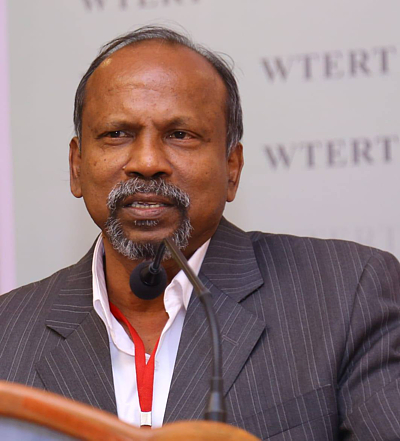
S Sampath (Photo: Worldofchemicals News)
For example, China has got more than 600 Waste to Power plants whereas India could manage to set up only four as of today. Even a small country like Thailand has more than 10 WTE plants. Decision Makers in India are still reluctant to adopt proven technologies for segregation and material recovery so that many recovered items can be recycled.
Also, there is no uniform approach to handle solid waste all over the country. For example, Tamil Nadu is going all out on micro composting involving more labor, more area and more exposure of waste, without realizing the health implications for the workers as well the residents living nearby. Some towns tried bio-methanation to convert organic waste into biogas but failed to do successfully mainly due to improper segregation.
Unfortunately, no southern state has taken imitative to set up Waste to Energy plant on a large scale. That said, Hyderabad is coming up with one Waste to Energy plant sometime next year and Cochin is about to start a WTE project next year. Andhra Pradesh placed order for 12 WTE projects five years back, except two, rest are shelved. The two projects may be set up in the near future in Vizag and Guntur.
Tamil Nadu govt is not supportive of Waste to Energy concept and is not considering setting up a plant for growing cities such as Chennai, Madurai and Coimbatore where the solid waste generation is more than 1000 TPD.
Telangana faces the problem of inadequate quantity of waste to convert into valuables except Hyderabad city.
Karnataka is talking about WTE plants in towns other than Bangalore.
What is the relevance and importance of plastics recycling and waste to energy technology for India?
Plastic Waste
All government departments are focusing on banning the plastics without realizing that good value can be generated if plastics are properly collected, segregated and recycled.
India needs more infrastructure, recycling parks and incentives for collecting and converting plastics into valuable product or energy.
If govt bodies look at plastic as an opportunity to make value out of it apart from its cost-effective packaging medium. Single use plastics are introduced mainly to bring in hygiene and to avoid human errors in cleaning and reusing.
CPCB recommends technologies like gasification, incineration and pyrolysis for disposing non-recyclable plastics into fuel or energy. Technologies are available for processing any kind of plastics from any quantity. The main issue is adapting technologies.
How are the activities of the National Solid Waste Association of India (NSWAI) beneficial in addressing the solid waste management problem?
National Solid Waste NSWAI – southern chapter assists various departments to choose the appropriate technologies, create awareness on advantages of using technologies for disposing MSW and plastic in particular. NSWAI conducts awareness programs and offers free consultancy on a regular basis.
NSWAI is willing to participate with the government in choosing technologies for different size of ULBs / Municipalities / Corporations by offering advantages of various technologies suitable for different places, based on the types of waste available.
How can the Waste Management Expo (WME) 2020 be a truly global platform for understanding the best practices and information exchange?
WME 2020 should bring in technology providers for Collection, Segregation, Processing, Landfill and Monitoring. They can be a specific focus on the availability and need of technologies for Pollution Control as well.
What can be some of the steps that the government of India and the corporate sector can implement to tackle solid waste management issues?
As said in the beginning Govt of India and Corporate have to induct agencies like NSWAI while preparing policies, guidelines, technology recommendations, project selections and implementation. Govt should also publish lists of recommended technologies available within India and also outside India.
Govt of India should also set up a large number of recycling facilities. It should consider offering incentives for recycling activities and not only focus on deploying more labor for collection to meet the requirements.
Source: Worldofchemicals News (12.12.2019)