Sorting for Circularity USA: Project Findings Unveil a Billion Dollar Opportunity
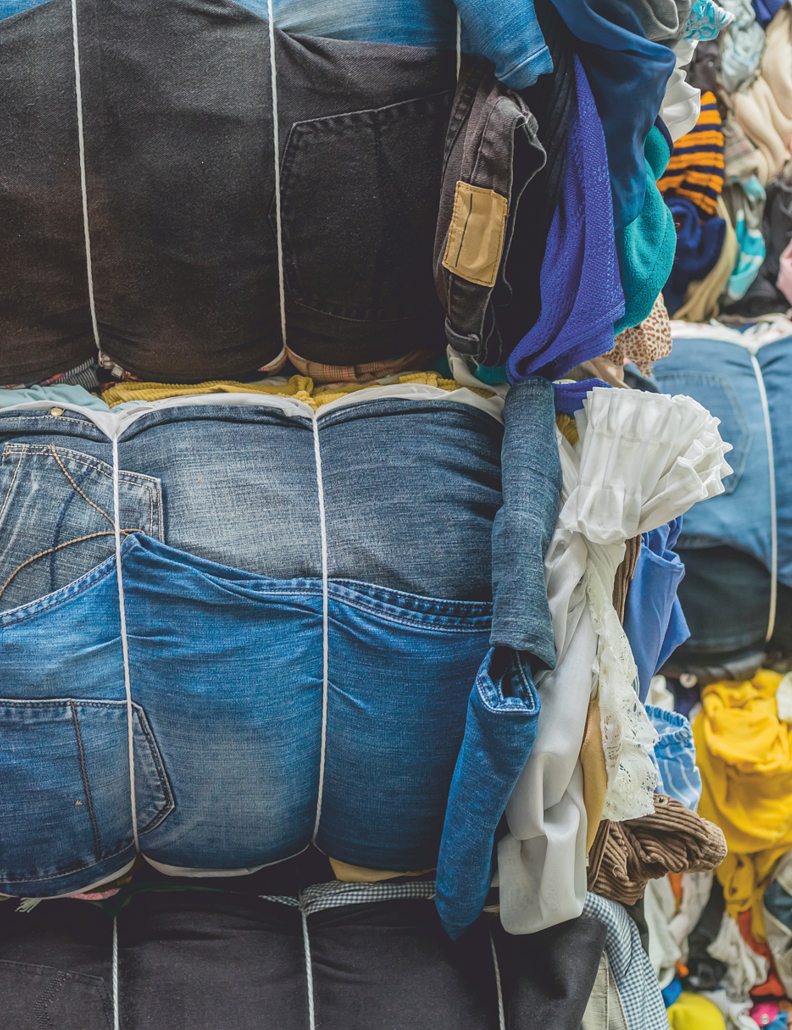
The organization Fashion for Good has launched the “Sorting for Circularity USA” report, unveiling significant findings from the project, according to the authors. (Credit: Julia Cameron, Pexels/Fashion for Good)
A first of its kind in the US, the report delves into consumer disposal behavior, textile waste composition, and the potential for fiber-to-fiber recycling within the country. It provides crucial insights for making informed decisions for further investments, infrastructure development and the next steps towards circularity.
Understanding the U.S. textile waste landscape
The United States is a global leader in textile consumption and waste generation, positioning itself as one of the largest sources of secondary raw materials for post-consumer textile feedstock. Despite this, only 15 percent of the textile waste generated in the US is currently recovered, with 85 percent ending up in landfills or incinerators.
With the impending policies in the European Union and certain American states, alongside commitments from both public and private sectors to promote fiber-to-fiber recycling, there is a growing demand for infrastructure related to post-consumer textile collection, sorting, and recycling.
“The Sorting for Circularity USA project addresses a key challenge in the textile industry: transforming textile waste into a valuable resource. This project investigates the connection between consumer behavior, waste generation, and available recycling technologies. The goal is to establish a system where all textiles are utilized effectively, minimizing waste.” – Katrin Ley, Managing Director, Fashion for Good
Addressing data gaps
In the pursuit of establishing a functional reverse supply chain and the necessary infrastructure, two critical areas lack data – consumer disposal behavior and material characteristics of post-consumer textiles. The Sorting for Circularity USA project addressed these gaps through a comprehensive national consumer survey and waste composition analysis.
The survey revealed that 60 percent of respondents divert textiles, while four percent discard them, driven primarily by factors such as condition and fit. On the other hand, the waste composition analysis unveiled that over 56 percent of post-consumer textiles are suitable for fiber-to-fiber recycling, with cotton and polyester being the most prevalent fiber types, indicating a substantial potential for these textiles to be used as feedstock for mechanical and chemical recycling processes.
“This research provides defensible insight into two parts of the recovery value chain with little to no existing data: firstly, how consumers decide what to do with textiles they no longer want and secondly, the fiber composition of postconsumer textiles. With these new findings, we can enhance collection systems to capture more textiles, calculate the financial potential for textile recycling, and build supportive, data-driven policy. We are eager to continue building upon this research to advance further opportunities for textile circularity.” – Marisa Adler, RRS

Credit: Julia Cameron, Pexels/Fashion for Good
Charting the path to a circular textiles future
The project revealed a 1.5 billion US-Dollar opportunity for fiber-to-fiber recycling by redirecting non-rewearable textiles from landfills and incinerators to recycling streams. The report outlines growth strategies for the US textile recycling industry, emphasizing enhanced financial value through efficiency improvements, increased commodity valuation, and policy mechanisms like extended producer responsibility schemes. Collaboration among stakeholders is crucial, including brands, government, retailers, consumers, collectors, sorters, recyclers, and financial institutions, to promote circularity, invest in research and development, and advocate for supportive policies and incentives to drive technological innovation. This redirection of textiles towards recycling underscores the substantial economic potential of embracing circularity in the textile industry. There is an opportunity to build on these insights and assess the feasibility of different sorting business models and (semi-) automated sorting technologies to create a demo facility suitable for closed-loop textile recycling. Ultimately, evaluating the commercial and technical feasibility of a semi-automated sorting process and identifying investment opportunities to scale solutions nationwide.
(Published in GLOBAL RECYCLING Magazine 2/2024, Page 6, Photo: Fotoschlick / stock.adobe.com)