
Closing the Footwear Loop
The project “Closing the Footwear Loop” was a major initiative led by Fashion for Good, bringing together 17 leading fashion and footwear brands and their existing circularity programs to tackle the complex challenges of circularity in the footwear industry. The Netherlands-based organization unites the fashion ecosystem to transform and build a regenerative industry.
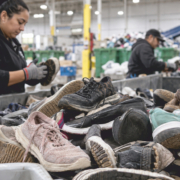
The report with the same name as the project “dives deep into the material flow, composition analysis and condition of post-consumer footwear waste, capturing the on-ground findings from our pilots with CETIA, Matoha, Picvisa, and The 8 Impact, and translating them into actionable insights for the industry,” Fashion for Good highlighted the results of the initiative. Some of the findings are:
- 50 percent of post-consumer footwear waste is non-rewearable
- 46 percent of post-consumer footwear waste is rewearable, and the remaining four percent is contaminated, hindering rewearability and recyclability
- 90 percent of rewearable footwear is exported, mostly to the UAE, China, and Pakistan
- 24 percent of shoes classified as non-rewearable had no physical damage
- 37,7 percent of non-renewable sole materials were unidentifiable by NIR scanning
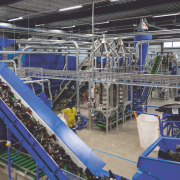
“The project also piloted what we believe to be one of the first three dedicated footwear sorting technologies, developed by Matoha, CETIA, and Picvisa,” Fashion for Good gave account. “Moreover, with France being the frontrunner EU country with a footwear-specific EPR scheme, we worked with The 8 Impact and successfully recycled sports shoes and sneakers using EPR feedstock, demonstrating that closed-loop recycling for these archetypes is technically possible.”
The report can be downloaded at fashionforgood.com/case-study/closing-the-footwear-loop/.
(Published in GLOBAL RECYCLING Magazine 3/2026, Page 23, Photo: MSV, AI-generated)