GLOBAL RECYCLING
  • Home
  • Magazine
  • Articles
    • Business Chances
    • Enterprises
    • Newsflash
    • Markets
    • Machinery
    • Processing Methods
  • Advertiser
  • Events
  • Media Kit
  • Imprint
  • Click to open the search input field Click to open the search input field Search
  • Menu Menu
  • Link to X
  • Link to Facebook
  • Link to Instagram
  • Link to LinkedIn
  • Link to Rss this site

Effective Recycling by Repairing Damaged Plastics at the Molecular Level

According to scientists at Japanese Tohoku University, plastic recycling could become far more effective thanks to a new technique that restores the strength of damaged engineering plastics by repairing them at the molecular level.

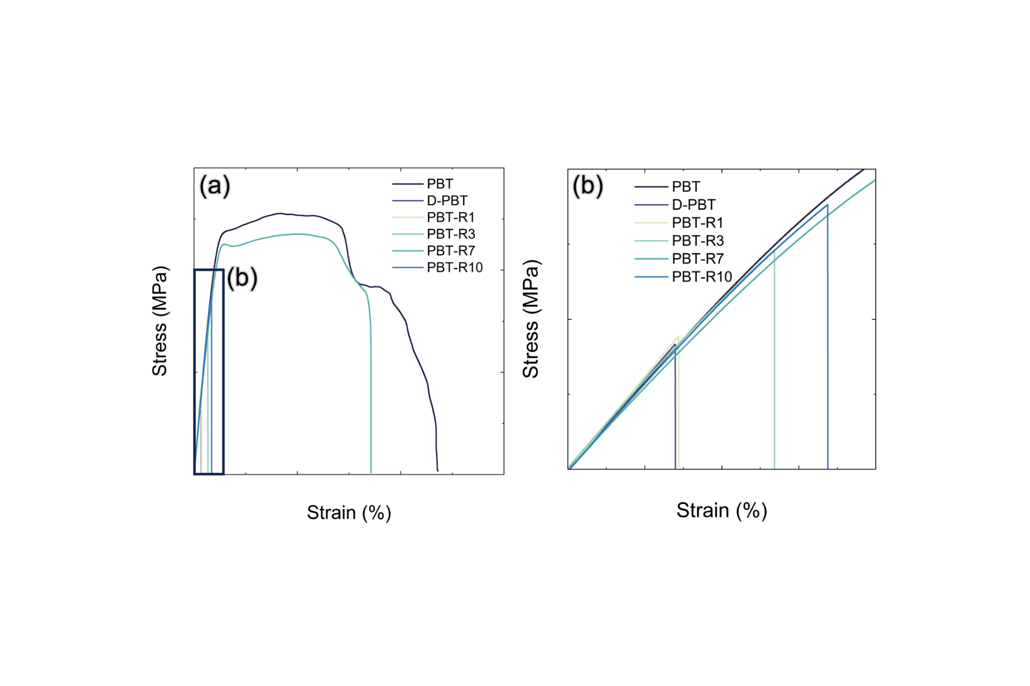
The researchers have developed a method to restore the mechanical strength of degraded polybutylene terephthalate (PBT), a durable engineering plastic widely used in automotive parts, electrical components, and industrial products. By adding a chemical compound known as a chain extender (called PPDI) during recycling, they were able to reconnect broken polymer chains and recover the material’s strength to a level close to that of new plastic. As underlined, the findings would address one of the biggest challenges facing plastic recycling. “Many plastics gradually weaken during use as heat and moisture break apart the long molecular chains that give them their strength. Although these materials can be melted and remolded, conventional recycling methods often fail to restore their original mechanical performance, limiting how they can be reused.” Furthermore, the team also found a clear relationship between molecular weight and mechanical strength. “By analyzing the recycled material using tensile testing, gel permeation chromatography, infrared spectroscopy, and end-group analysis, they showed that the recovered strength follows a Fox-Flory-type relationship,” the university gave account. “This means the future performance of recycled plastics can be predicted from their molecular characteristics rather than relying on trial-and-error processing.”

“This study demonstrates that recycling can be approached scientifically,” Hiroki Kurita, Associate Professor of Tohoku University’s Graduate School of Engineering, was quoted. “By understanding how molecular weight affects mechanical strength, we can transition from empirical methods of recycling to predictive ones.”

The researchers would hope their approach would contribute to a more circular materials economy by enabling high-performance plastics to be reused instead of discarded, Tohoku University stated. “As demand for sustainable manufacturing continues to grow, repairing polymers at the molecular level could help reduce plastic waste, conserve valuable resources, and extend the lifespan of engineering materials.”

tohoku.ac.jp

(Published in GLOBAL RECYCLING Magazine 3/2026, Page 31, Source: Otsuka et al.)

AD
195
Share this entry
  • Share on Facebook
  • Share on X
  • Share on WhatsApp
  • Share on Pinterest
  • Share on LinkedIn
  • Share on Tumblr
  • Share on Vk
  • Share on Reddit
  • Share by Mail
https://global-recycling.info/wp-content/uploads/2026/09/Molecular-Level-326.jpg 686 1030 msv2016 https://global-recycling.info/wp-content/uploads/2023/12/GR-Logo-250-100.png msv20162026-11-03 08:47:222026-09-23 14:29:39Effective Recycling by Repairing Damaged Plastics at the Molecular Level
You might also like
ERI is the “Recyclers’ Recycler”
Antwerp to Host the Entire Circular Economy for Plastics Value Chain at Go Circular Event
Development of Technology to Regenerate Single-use Plastics into High Strength Reinforced Plastics
The Artist of our Cover Photo and his Commitment
Starlinger Delivers Its First Bottle-to-Bottle Plant to Turkey
Advanced Recycling Company Mura Technology Accelerates Global Drive Towards a Circular Plastics Economy with LG Chem

AD

GLOBAL RECYCLING

The Magazine for Business Opportunities & International Markets.

Global trends in the circular economy, particularly in the recycling and recovery industry as well as in waste recycling. Markets for technology, logistics and raw materials.
© MSV Mediaservice & Verlag GmbH
Privacy Policy

Check out our websites

EU-Recycling
Recyclingportal

Topics

Business Chances, Enterprises, Newsflash, Markets, Machinery, Processing Methods and Events.
In general: Recycling Industry, Circular Economy, Recycling Technology, Secondary Raw Material, Recycling, Recycling Markets, Collection, Reuse, Waste, Waste Management, Industrial Waste, Automobile Recycling, Scrap, C&D Waste, Electronic Scrap Recycling, Screening Machines, Separator, e-Waste, Sorter, Sensor Sorter, Splitter, Crusher, Shredder, Magnetic Separators, Metal Recycling, Ferrous, Non-Ferrous, Plastic Recycling, Scrap Recycling, Wastepaper, Plastic Waste, Second Hand Clothing, Textile Waste, Tyres, Hazardous Waste, Waste Processing Plants, Waste Legislation and much more.

Tags

AI aluminum batteries BIR China circular Circular Economy collection E-Waste economy energy EuRIC Europe FEAD Global Recycling Foundation India Industry landfill management metal metals packaging Paper PET plant plastic plastics Plastic Waste recovery Recycling Scrap Shredder shredding sorting steel sustainability Sustainable technology Textile Textiles USA waste waste management wastewater WEEE
Link to: Ten Years to the Recycler Link to: Ten Years to the Recycler Ten Years to the Recycler Link to: The New Generation of the SENNEBOGEN 822 G for Efficient Material Handling Link to: The New Generation of the SENNEBOGEN 822 G for Efficient Material Handling The New Generation of the SENNEBOGEN 822 G for Efficient Material Handling
Scroll to top Scroll to top Scroll to top