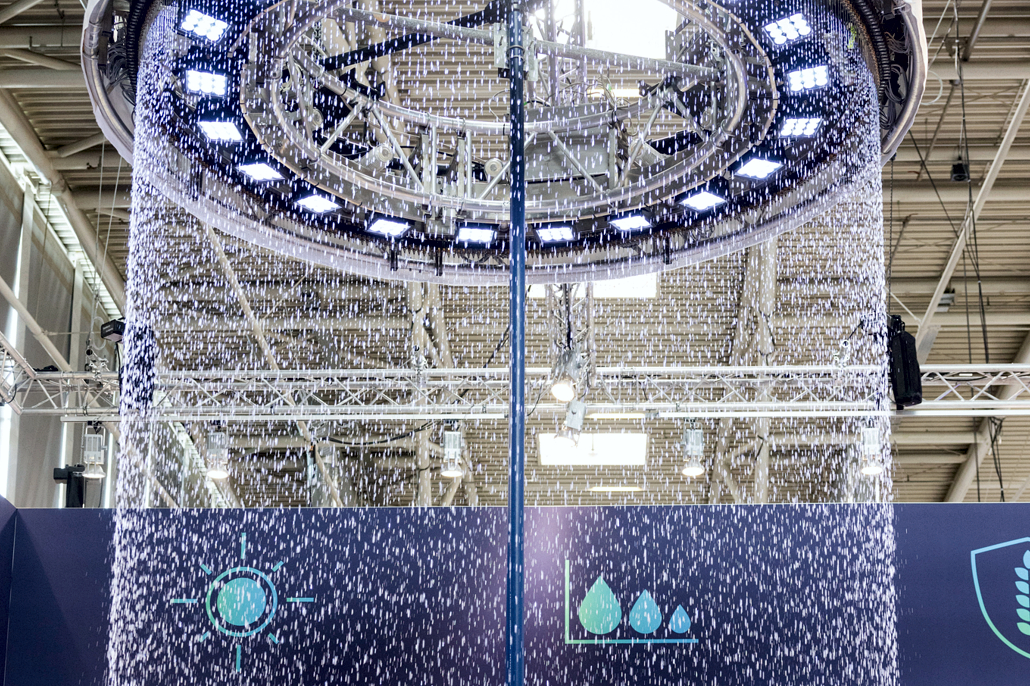
IFAT Munich 2026: Focus on Municipal Water
According to the organizers, cities and municipalities are under significant pressure to improve water and wastewater management due to stricter regulations, climate change impacts, and increasing investment demands, all while facing limited resources.
As emphasized, IFAT Munich 2026 will show, which technical, regulatory and organizational solutions municipalities need now. From May 4 to 7, 2026, over 3,000 exhibitors from more than 60 countries will present their solutions for water, recycling and circularity at the trade fair for environmental technologies. A key focus is traditionally on water management. Municipalities are faced with the task of future-proofing the drinking water supply and wastewater treatment, implementing new legal requirements, and expanding their infrastructures to make them climate-resilient.
Examples
The discussion about per- and polyfluoroalkyl substances (PFAS) has developed from a specialist topic into a socially relevant debate, the organizers underscore. “Local authorities must comply for the first time with binding PFAS limit values in drinking water. That requires investments in monitoring, analytics and processing technologies. At the same time, there is an increased focus on site remediation, as the high mobility of these substances, also known as ‘forever chemicals’, poses risks to the drinking water supply.” The panel “PFAS in focus: challenges and solutions for dealing with the poison of the century” – organized by figawa e. V. on May 6, 2026, on the Blue Stage – would discuss how PFAS can be handled in technical and economic terms. In addition, a presentation by the German Association for Waste Management (DGAW) on May 4 will show how PFAS can be removed from water streams and destroyed using activated carbon.
In the European Union, the Urban Wastewater Treatment Directive (UWWTD), revised in 2024, presents the revised framework conditions for urban water management. It is seen as a milestone for water protection, but also a huge challenge for wastewater management and municipalities, as per Dr. Lisa Irwin-Broß, member of the DWA Management Board. According to its specifications, a fourth purification stage will need to be added to several hundred wastewater treatment plants in Germany alone by 2045. In addition, wastewater treatment is to be energy-neutral in the future. The DWA – German Association for Water, Wastewater and Waste – and the Association of Municipal Enterprises (VKU) will address this issue at the trade fair.
Phosphorus recycling is also an important topic. As reported, from 2029, municipal wastewater treatment plant operators in Germany will be obliged to recover phosphorus if the phosphorus content of the sewage sludge dry matter is at least two percent. Although the regulatory requirements are straightforward, numerous municipalities encountered practical challenges when it came to economically implementing them. “Phosphorus recycling should be integrated into the planning of sewage sludge recycling at an early stage and in the long term. An open dialog between all parties involved is crucial,” Tabea Knickel, Managing Director of the German Phosphorus Platform (DPP), was quoted. The DPP will be hosting the discussion panel “Phosphorus recovery in dialogue: challenges and prospects”. The DWA and DVGW – German association for gas and water – will hold their joint innovation forum “Regional Phosphorus Recycling”.
(Published in GLOBAL RECYCLING Magazine 1/2026, Page 28, Photo: Messe München GmbH)